
For many freight forwarders, customer acquisition has long relied on a familiar mix of referrals, occasional sales emails, and a presence on LinkedIn. While these methods have their place, they are no longer sufficient for sustainable growth in a competitive global market. An effective freight forwarder marketing strategy must evolve to address a critical business reality: the constant need to replace lost business. The B2B freight industry faces a significant annual customer churn rate, putting immense pressure on sales teams to continually fill their pipelines.
This pressure is compounded by a fundamental shift in how shippers select their logistics partners. Modern supply chain directors and import managers now conduct extensive online research on Google to vet and shortlist potential forwarders long before making initial contact. If your company is not visible during this critical evaluation phase, you are effectively excluded from consideration. This article outlines a practical, multi-channel strategy to ensure your firm is not just present but prominent, creating a consistent flow of qualified leads.
The High Cost of Stagnant Customer Acquisition
The traditional approach to finding new shippers is becoming a significant business liability. Relying on a static network of referrals and sporadic outreach creates an unpredictable and often insufficient stream of new business. This reactive model is particularly risky given that some industry analyses suggest B2B freight can experience customer churn rates approaching 40% annually. This means a substantial portion of your revenue is at risk each year, requiring a proactive and systematic approach to replacement and growth.
Compounding this challenge is the modern buyer’s journey. Today’s shippers behave like consumers, turning to search engines to find solutions for their specific logistics needs. They are not waiting for a sales call. Instead, they are actively searching for forwarders with expertise in certain trade lanes, industries, or customs regulations. A forwarder without a strong digital footprint is invisible during this crucial research phase. The cost of this inaction is not just missed opportunities, it is a slow erosion of market share as more digitally adept competitors capture the attention of high-value shippers.
Limits of a LinkedIn-Only Freight Forwarder Marketing Strategy
While LinkedIn is a valuable tool for networking, treating it as the sole pillar of your marketing strategy is a high-risk proposition. Building your entire lead generation engine on a single platform is like building a business on rented land. An unexpected algorithm change can instantly diminish your visibility and cut off your flow of inquiries, leaving you with no alternative. Furthermore, corporate company pages on LinkedIn typically see very low engagement. Data shows that personal profiles from founders and sales leaders can achieve 10 to 15 times more reach, yet many forwarders focus their efforts on broadcasting from a low-impact company page.
This over-reliance also ignores a large segment of the target audience. Many shippers and importers are not active daily users of LinkedIn, preferring to use Google when actively searching for a new logistics partner. As noted in industry discussions highlighted by experts like Temsme, logistics buyers now research and shortlist vendors online before initiating contact. A LinkedIn-only approach misses these high-intent prospects entirely. Worse, it often encourages generic mass-messaging tactics that do more to damage a forwarder’s reputation than to build it. A truly effective b2b logistics marketing plan must be more diverse and resilient.
Building a Resilient Inbound and Outbound Mix
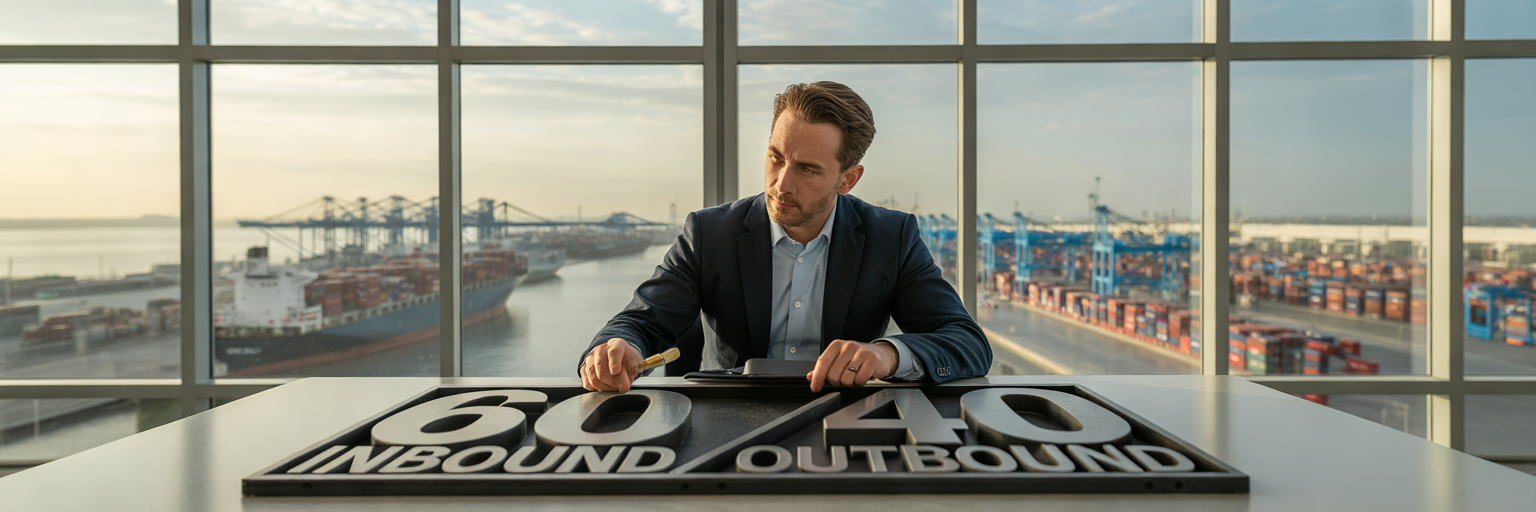
The most successful mid-size freight forwarders build a predictable pipeline by balancing their marketing efforts. A resilient strategy typically aims for approximately 60% of new business to come from inbound channels, with the remaining 40% driven by targeted outbound activities. This balanced approach ensures a consistent flow of opportunities for FCL, LCL, air, and ocean freight services, making the business less vulnerable to the performance of any single channel.
Inbound marketing focuses on attracting shippers by establishing your firm as an authority. This is achieved by creating valuable content, optimising your website for search engines, and engaging on social media. The goal is to be the answer when a potential customer asks a question online. In contrast, outbound marketing involves proactively targeting specific, high-value accounts through strategic email campaigns, focused LinkedIn outreach using tools like Sales Navigator, and direct sales efforts. This strategic blend is the core of effective lead generation for freight forwarders, combining long-term brand building with immediate commercial pursuits.
| Factor | Inbound Marketing | Outbound Marketing |
|---|---|---|
| Primary Goal | Attract shippers by providing value | Directly target specific shippers |
| Key Channels | SEO, Content (Guides, Case Studies), Website | Targeted Email, LinkedIn Sales Navigator, Sales Calls |
| Audience Approach | Broad, based on search intent and problems | Narrow, based on company profile and role |
| Time to Results | Medium to long-term (3-9 months) | Short to medium-term (weeks to months) |
| Example | A shipper finds your guide on 'customs brokerage for perishables' via Google | Your sales team contacts a pre-identified automotive parts importer |
Laying the Foundation with SEO and Content
Search engine optimisation and high-quality content are the foundational assets for long-term customer acquisition for freight forwarders. This is how your company gets discovered when shippers are actively looking for solutions on Google. Instead of creating generic blog posts, focus on developing strategic digital assets that answer specific commercial questions and demonstrate deep expertise. This approach to seo for freight forwarders directly connects your services to active buyer needs.
Effective content that drives qualified traffic includes:
- Key Trade Lane Pages: Detailed pages such as 'FCL Shipping from Shanghai to Rotterdam' that capture high-intent searches.
- Industry Vertical Pages: Content tailored to specific sectors, like 'Automotive Logistics Solutions for UK Importers', positioning you as a specialist.
- Service Specialisation Pages: Pages that highlight niche expertise, for example, 'Customs Brokerage for Perishables in North America'.
- Problem-Solving Guides: Practical resources like 'A Guide to International Trade Documentation for First-Time Exporters' that build trust and authority.
These digital assets work for you 24/7, attracting potential clients and establishing your credibility. They are not one-off marketing pieces but long-term investments that can be repurposed for email newsletters, sales presentations, and social media updates. Building a strong digital presence is essential for turning website traffic into commercial opportunities, a core focus of specialized services like the ones we provide.
Using LinkedIn Effectively in a Multi-Channel System

Within a multi-channel system, LinkedIn’s role shifts from being the entire strategy to becoming a powerful distribution and engagement tool. The key is to use it with precision and purpose. Instead of relying on low-engagement corporate posts, forwarders should adopt a personal-first approach. Founders, executives, and sales leaders should share insightful market commentary, analyse trade news, and offer their expert perspective. This builds personal authority and attracts a following of relevant industry professionals, including potential shippers.
For outbound efforts, move away from ineffective mass-messaging. Instead, leverage LinkedIn Sales Navigator to identify and engage a curated list of high-value prospects. This allows for highly personalised outreach based on a prospect’s company, role, and recent activity. The platform also becomes a vital tool for nurturing relationships. By consistently engaging with content from potential customers and industry partners, your sales team can stay top-of-mind and build rapport long before a direct sales conversation occurs. This elevates LinkedIn from a simple contact database to a strategic component of your overall marketing plan, like the comprehensive strategies we help forwarders build.
Integrating Marketing Efforts with Sales Operations
A sophisticated marketing strategy is only effective if it is seamlessly integrated with your sales operations. Generating leads is only half the battle; converting them requires speed and precision. As highlighted in a GoFreight industry report, the first vendor to respond to an inquiry wins the business 78% of the time. This "speed-to-lead" principle underscores the need for a robust system to handle every digital inquiry.
To ensure no opportunity is lost, all leads from your website, content downloads, and digital campaigns should be routed directly into a CRM system. This creates a single source of truth and enables immediate action. Implement automated, route-aware follow-ups. For instance, a website inquiry for 'air freight to JFK' should instantly trigger a relevant email confirmation and simultaneously alert the correct sales team member responsible for that trade lane. This level of integration transforms marketing activities from abstract efforts into a measurable commercial engine, a crucial element of effective marketing for nvocc and freight forwarders alike. Forwarders looking to implement such integrated systems can explore specialized services designed for the freight industry.